
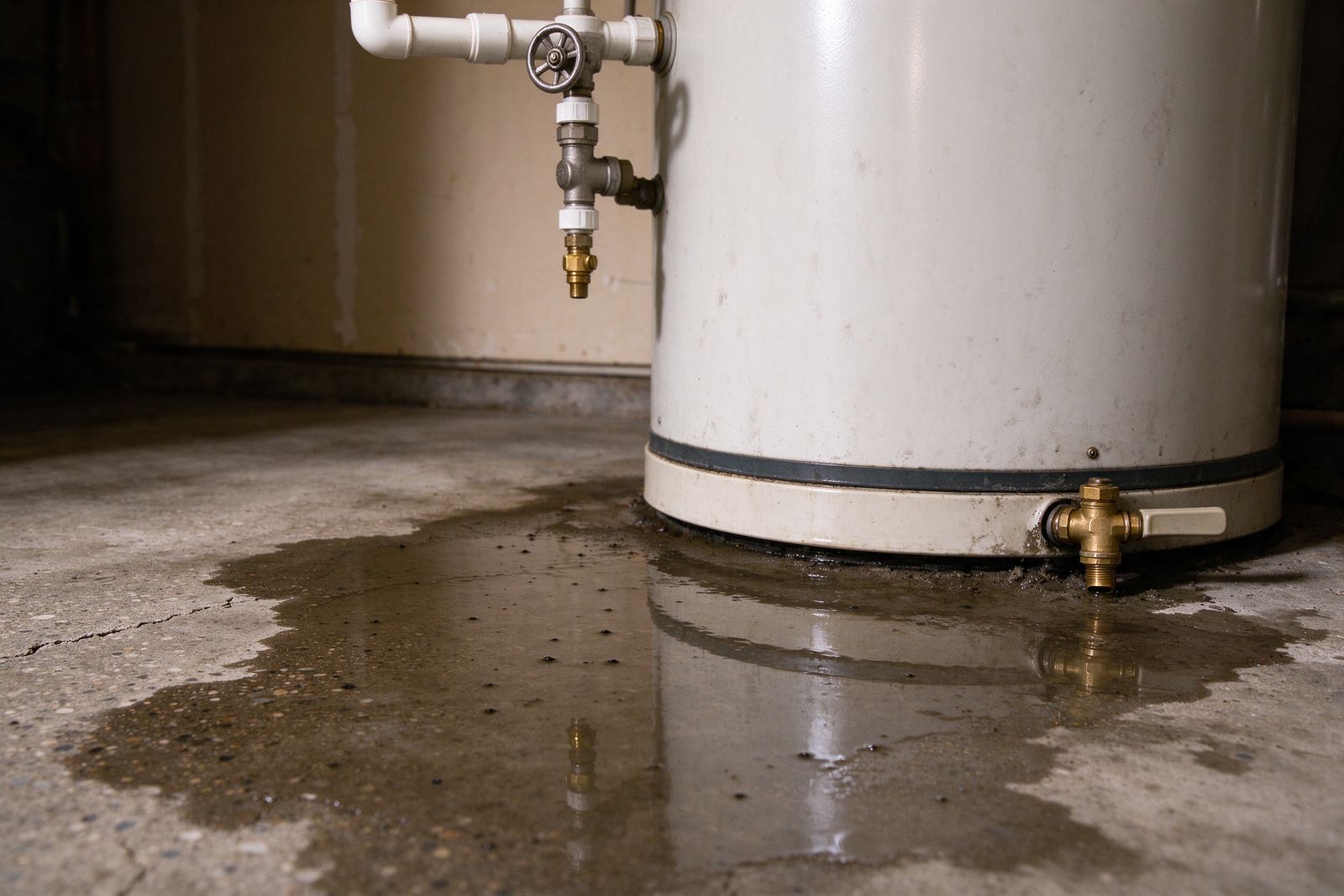
Shut It Down Safely
- Close the cold water supply valve on the pipe entering the top of the tank. If it will not turn or there is none, close the main shutoff.
- Turn off the energy source. Electric: switch off the dedicated breaker at the panel. Gas: turn the control knob to off or pilot as shown on the label on the unit. Do not improvise with gas fittings.
- Keep hands clear of hot water. Water from the relief valve, the drain valve or a failed tank can be scalding. Let the tank cool before you touch fittings.
- Contain the water. Towels, a wet vacuum, or a hose from the drain valve to a floor drain if you are comfortable doing it once the tank has cooled.
Stop if you smell gas. At any point in these steps, a rotten-egg or sulfur smell near a gas water heater means you leave the house and call your gas utility or 911 from outside. Do not try to find the source.
Where Is It Leaking From?
Dry the area, put down a sheet of paper towel or cardboard, and look again after a few minutes. Where the water first appears tells you most of what you need to know.
| Source | What it often means | Typical urgency |
|---|---|---|
| Fittings at the top (supply lines, unions) | A loose or corroded connection | Soon; often repairable |
| Relief valve or its discharge pipe | Excess pressure or temperature, or a worn valve | Soon; the cause needs checking |
| Drain valve near the bottom | Valve not fully closed or worn | Often can wait with a cap or bucket |
| Bottom of the tank or from under the jacket | The tank itself may be failing | Now; tanks rarely recover |
| Condensation on a newly filled tank | Normal for a short time after a fill | Watch it; should stop |
The Relief Valve Is a Safety Device
The temperature and pressure relief valve on the side or top of a tank opens when pressure or temperature inside gets too high. Water from its discharge pipe means it is either doing its job or worn out. Never cap, plug or remove the discharge pipe to stop a drip. That defeats the device that keeps the tank from over-pressurizing.
The messy middle
The drip that comes back. A relief valve that drips after hot water use is sometimes a symptom of thermal expansion in a closed system, where a check valve or pressure regulator prevents expanding water from flowing back to the street. Replacing the relief valve alone does not fix that. Ask a licensed plumber to check the household water pressure and whether an expansion tank is installed and charged correctly.
Tankless Units
Tankless heaters have no large tank to fail, but they leak at connections, at the heat exchanger, or at the condensate line on condensing models. The shutdown is the same idea: close the isolation valves under the unit, switch off its power, and for gas units turn the gas valve to off following the manufacturer's label. Many units show an error code on their display; photograph it for whoever services the unit.
Gas Smell: Leave and Call, Not Plumbing DIY
Natural gas and propane have an odorant added so leaks can be noticed. If you smell it near a water heater, furnace, range or dryer, the safe response is the same regardless of the source:
- Get everyone out of the house right away.
- Do not operate switches, appliances, phones or lighters inside, and do not start a car in an attached garage.
- Call the gas utility or 911 from outside, at a distance from the building. The utility's emergency number is on its website and your bill.
- Wait for responders to clear the house before going back in.
Work on gas piping and gas appliance connections is licensed, often permitted work in most places. A plumber may be the right person for the repair afterward, but the first call belongs to the gas utility.
What Happens Next
Before anyone comes out, the questions in the choosing guide help you understand trip fees and after-hours pricing. Document the leak and any damage for insurance as described in the water damage guide.