
Three Questions That Decide It
Before you call anyone, answer three questions honestly. They cover nearly every case and they take less than a minute.
- Can I stop the water? If a fixture stop or the main shutoff closes and the water stops, the clock slows down dramatically. If nothing stops it, you are in emergency territory.
- Is anything unsafe right now? Water near outlets, a panel or a light fixture; sewage inside the living space; a ceiling that is bulging; a gas smell. Any of these moves the problem to the top of the list.
- Will waiting cause new damage? A contained drip into a bucket will not. Water soaking into subfloor, drywall or a finished basement overnight will, and that damage often costs more than the plumbing repair.
If the answers are yes, no and no, you can usually wait for regular hours. Any other combination deserves a closer look below.
The valve test. Turning a shutoff is the single most useful diagnostic you have. Most "emergencies" become "tomorrow morning" the moment a valve closes. If you do not know where yours are, read the shutoff valve guide before you need it.
Situations That Usually Justify Help Tonight
These share a pattern: water or waste is moving and you cannot control it, or the situation carries a health or safety risk that gets worse with time.
| What you see | Why it cannot wait | First move |
|---|---|---|
| Water spraying or pouring and the shutoff will not close | Volume adds up by the minute and reaches framing and floors | Try the meter or curb stop; call your water utility if you cannot |
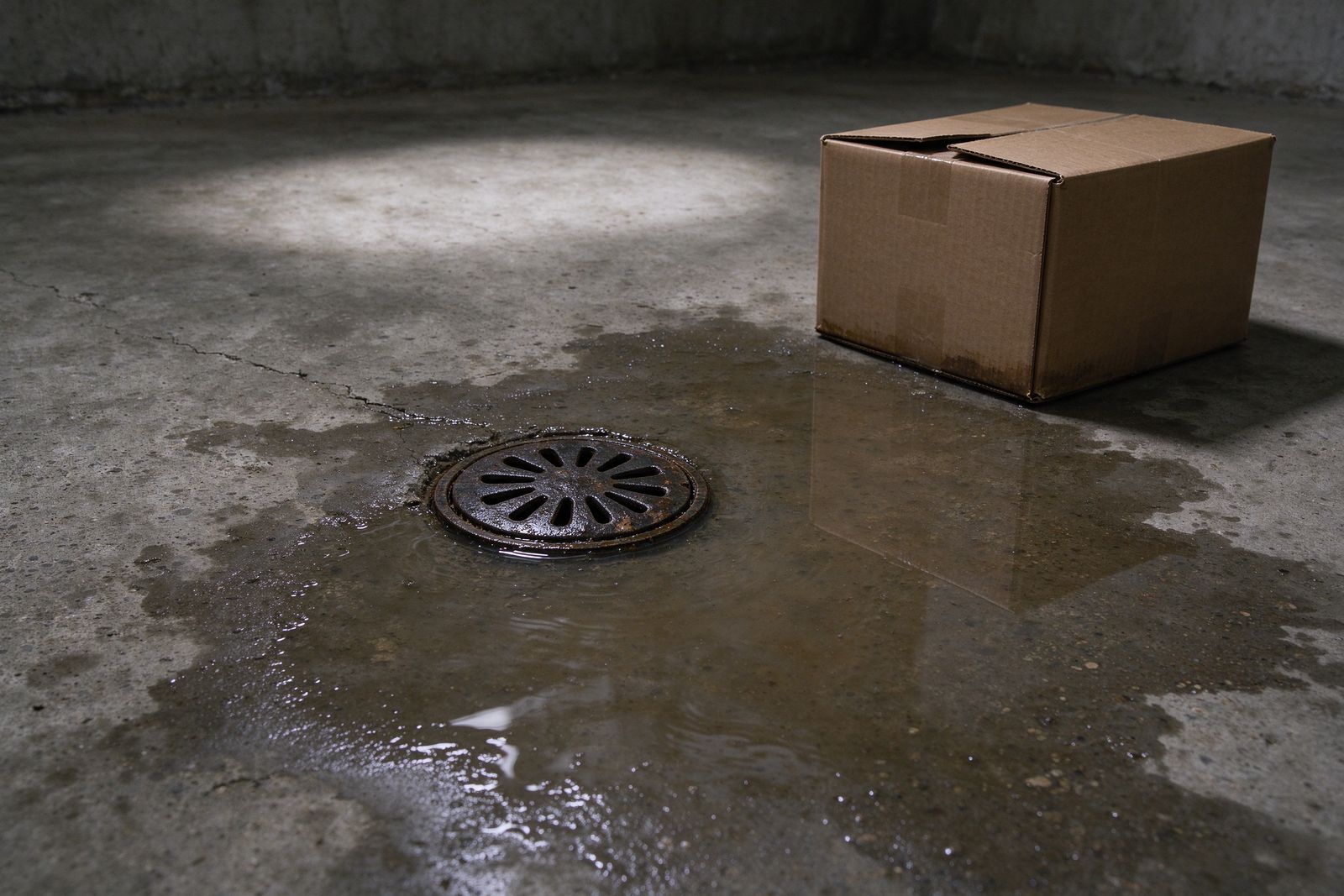
| Sewage rising at a floor drain, tub or toilet | Wastewater carries bacteria and spreads into porous materials | Stop all water use in the house |
| Water through a ceiling or light fixture | Electrical hazard plus risk of a ceiling giving way | Main off, circuit off from a dry spot, clear the room |
| No water during a hard freeze | A frozen section can split when it thaws | Leave taps open; see the frozen pipe section |
| Water heater leaking from the tank body | Tanks rarely seal themselves; hot water adds scald risk | Close cold supply, cut power or gas per the label |
| Gas smell near any appliance | Fire and explosion risk | Leave, then call the gas utility or 911 from outside |
Problems That Can Usually Wait for Morning
These are annoying and sometimes wasteful, but a fixture valve or a little patience contains them. Paying an after-hours rate rarely makes sense here.
- A dripping faucet or a slow leak under a sink that stops when you close the stop valve underneath.
- A running toilet. Close the stop valve behind it and flush by pouring a bucket of water into the bowl until it is fixed.
- One slow or clogged drain while every other drain in the house works. That points to a local clog, not the main line.
- No hot water with no leak. Check the breaker for an electric unit or the pilot instructions on the label of a gas unit, then book a visit.
- Low pressure at one tap. A clogged aerator is a common cause and takes minutes to clean.
The Grey Zone: When It Depends
Some problems land in between. The deciding factor is usually where the water is going and whether it will get worse while you sleep.
Where this goes wrong
The valve that will not turn. Shutoffs that have not moved in years can seize. People reach for a wrench or a cheater bar and snap the stem, which turns a contained problem into an open one. Use firm, steady hand pressure. If it will not move, stop and use the next valve upstream: the main, then the meter or curb stop, then your water utility. Replacing a seized valve is a good non-emergency job to schedule once the crisis is over.
Weighing the After-Hours Cost
After-hours pricing varies by company and region, so there is no fixed number to compare against. What you can compare is the cost of waiting. A night of water soaking into drywall, carpet pad and subfloor usually costs more than the difference between an evening call and a morning one. A contained drip costs almost nothing to leave overnight.
A useful middle path is to ask whether a plumber can stabilize tonight and finish in regular hours: cap a split line, isolate a fixture, or clear a main enough to use the house. Our guide to choosing an emergency plumber lists the pricing questions to ask before anyone drives over.
A Checklist to Keep by the Panel
Print this or save it in your phone notes. Fill in the blanks on a calm day.
- Main shutoff location: ____________ Type: lever / wheel
- Water heater cold supply valve checked: yes / no
- Toilet and sink stop valves tested: yes / no
- Water utility emergency number: ____________
- Gas utility emergency number: ____________
- Insurance claim line and policy number location: ____________
If you decide you do need someone, the service request form sends an inquiry by email. It is not a dispatch line, so for anything that cannot wait, stop the water first and call a licensed local plumber directly.