
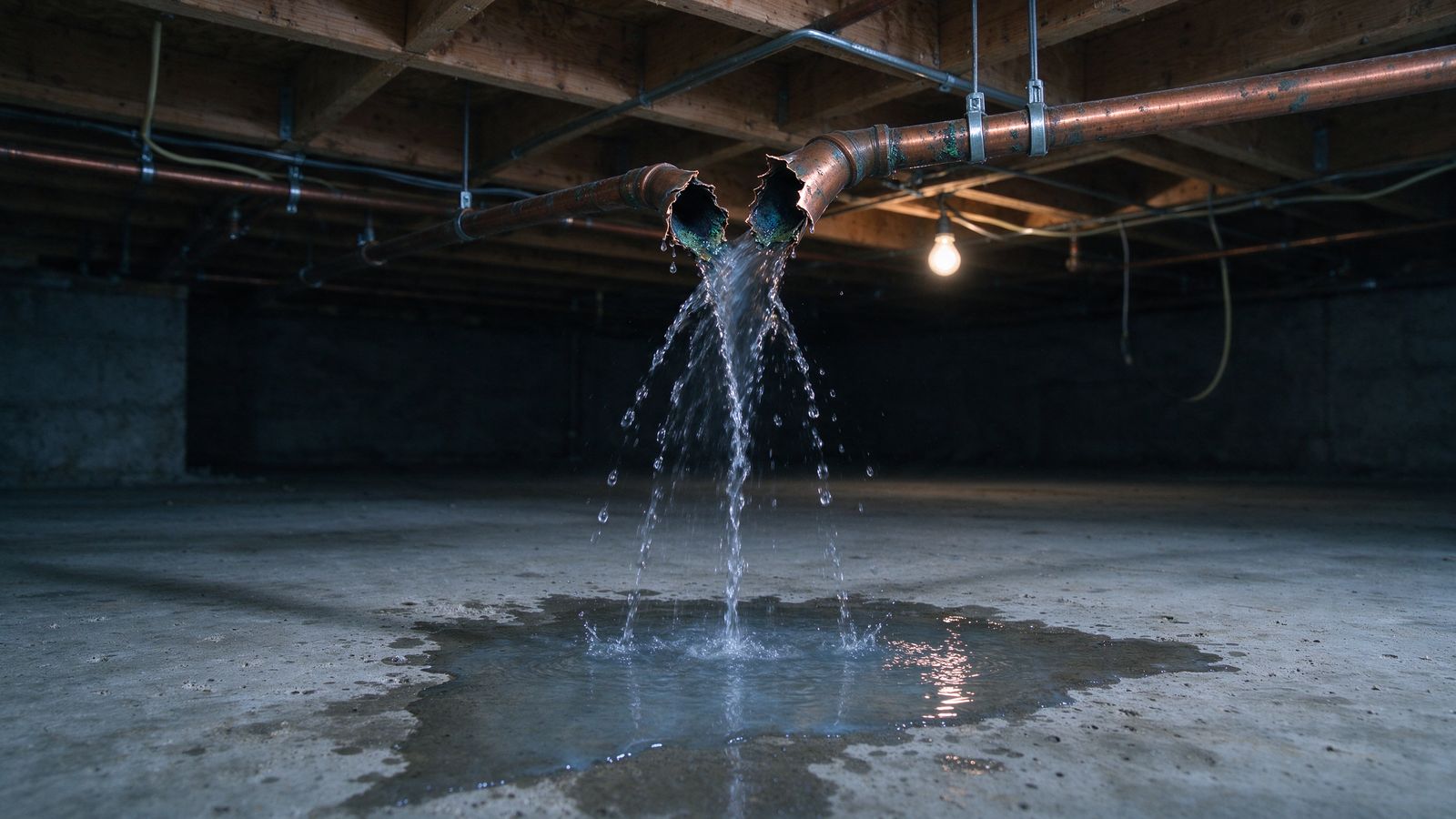
The First Minutes, in Order
- Close the main shutoff. Do not look for a fixture valve first; a burst line is upstream of most of them. If you do not know where the main is, the shutoff valve guide lists where to look.
- Open the lowest cold tap in the house to drain the pressure and the water still in the pipes. A burst on an upper floor stops sooner if you also open a tap below it.
- Turn the water heater to vacation or pilot, or switch off its breaker if it is electric, if the shutdown may last more than a short while.
- Photograph the break and the spread before you start cleaning: the pipe, the ceiling or wall, the floor, and anything sitting in water.
- Move water out and belongings away. Wet-vacuum, mop and towel; lift rugs and boxes; get air moving.
Why the main and not the leak. People often try to grip, tape or clamp a spraying pipe first. Under full pressure that rarely holds and keeps you standing in the water. With the main closed, the pipe is just a pipe and every temporary fix gets easier.
When Water Reaches Electrics
Water through a ceiling light, into an outlet, or near the electrical panel changes the priorities. Do not walk through standing water to reach a panel. If you can reach the panel from a dry spot, switch off the circuits for the affected area, or the main breaker if you cannot tell which. If you cannot get to it safely, keep everyone out of the wet area and tell your utility or emergency services what is happening.
Ceilings that are bulging or sagging can hold a surprising amount of water. Keep people out from under them. Some people pierce a small hole at the lowest point over a bucket to release the water in a controlled way; only do this if you can stand on dry ground clear of any light fixture.
Once the Water Stops
The damage clock keeps running after the flow ends, because water keeps soaking into porous materials. Prioritize by what absorbs fastest:
| Material | What tends to happen | What to do now |
|---|---|---|
| Carpet and pad | The pad holds water long after the carpet feels dry | Lift a corner to check; pull wet pad from the floor if you can |
| Drywall | Wicks water upward from the floor line | Mark the wet line with tape and photograph it with a ruler |
| Wood floors | Can cup or swell as boards take on water | Remove standing water fast and keep air moving |
| Furniture and boxes | Stain and wick from the bottom | Lift onto blocks or foil; move to a dry room |
The water damage and insurance guide covers drying and documentation in more depth.
Frozen Pipes and the Thaw
A frozen pipe often does not leak while it is frozen. Ice expands, pressure builds between the ice plug and a closed tap, and the pipe can split somewhere that looks fine. The leak shows up when the ice melts. That is why a sudden loss of water in a hard freeze deserves attention right away.
- Open the faucet the frozen line feeds so pressure has somewhere to go and you can see water start to flow as it thaws.
- Warm the space, not the pipe with a flame. Open cabinet doors, raise the thermostat, use a hair dryer or a space heater kept at a safe distance. Never use a torch or open flame on a pipe inside a house.
- Know where the main is before it thaws, so you can close it the moment a split shows itself.
- Check exterior walls, crawlspaces and garages first. Lines in unheated or poorly insulated spots tend to freeze first.
The messy middle
The quiet split. A pipe in a wall cavity can split during a freeze and drip slowly into the wall for days before anyone notices staining. If you had a frozen line, watch nearby walls and ceilings over the following week, and listen for water running when every tap is closed. A water meter that keeps turning with everything off is another clue.
Temporary Fixes and Their Limits
Any temporary fix is a bridge to a real repair, not a replacement for one. Pipe material, local code and the condition of the surrounding lines decide the permanent fix, which is licensed work in many places.
Preventing the Next One
Insulate pipes in exterior walls, crawlspaces and garages. Disconnect garden hoses before freezing weather and close the interior valve for outdoor faucets if you have one. When you travel in winter, keep the heat on at a moderate setting and consider closing the main while you are away. And test your main shutoff once a year so it moves when you need it.