
General information only. Insurance coverage depends on your policy wording, your state and your insurer. Nothing here is insurance or legal advice. Read your policy and ask your insurer or agent directly.
Photograph Before You Clean
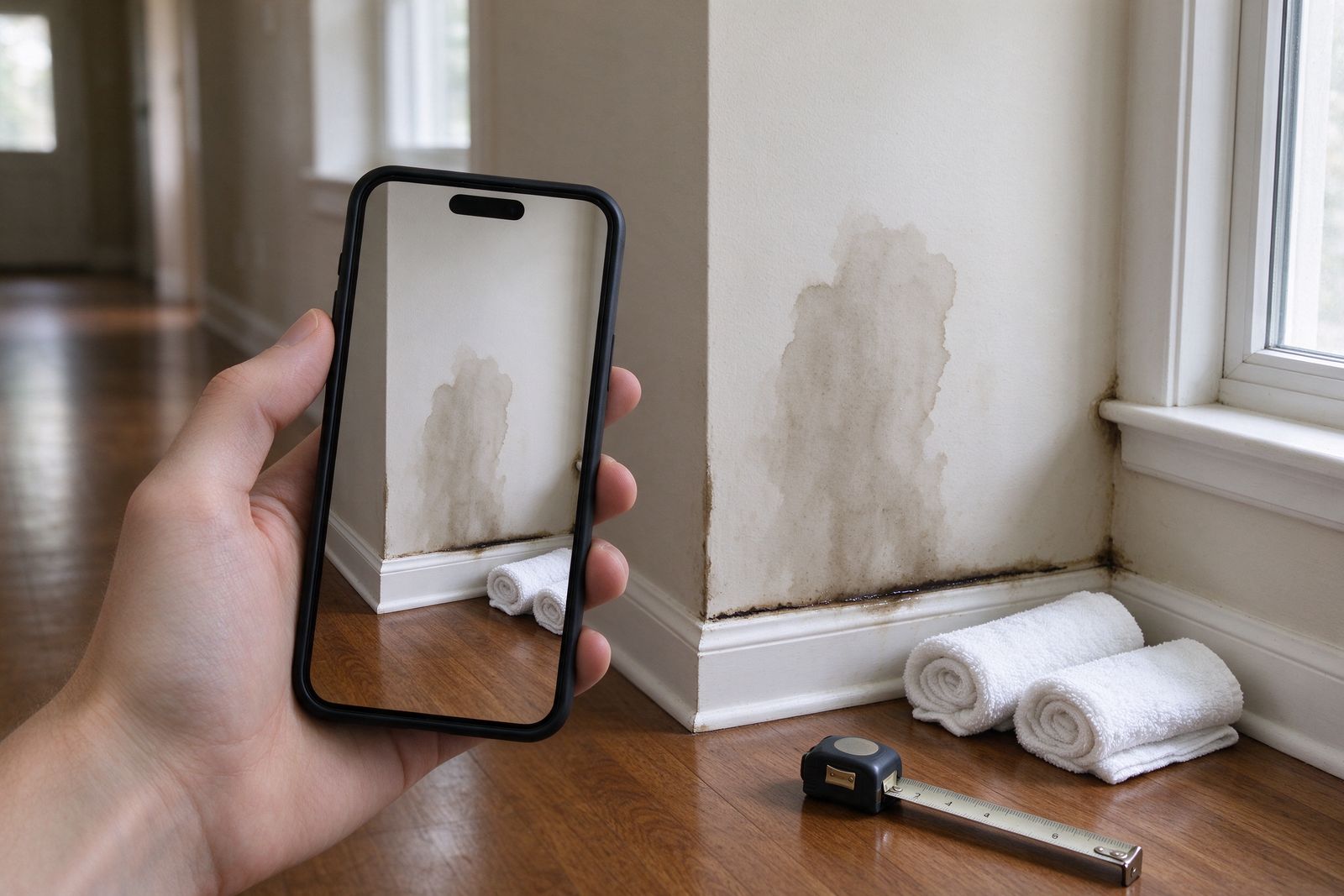
Once the water is off and the area is safe, spend five minutes on photos before you move or throw out anything. A phone is enough. Aim for a record that a stranger could follow later.
- Wide shots of every affected room from the doorway, so the layout and extent are clear.
- The source: the split pipe, the failed supply line, the leaking tank, the backed-up drain.
- Water lines on walls with a tape measure or ruler held against them for scale.
- Damaged belongings where they sit, with brand and model labels where you can.
- A slow video walkthrough narrating the time and what you see. It catches things photos miss.
Phones store the date and time with each photo. Keep the originals; do not crop or filter the copies you send.
Limit Further Damage
Most policies expect the homeowner to take reasonable steps to prevent more damage once a loss happens. In practice that means acting quickly and keeping receipts for what you spend.
| Step | Why it matters | Keep |
|---|---|---|
| Stop the water source | Ends new damage | Note the time the water was shut off |
| Remove standing water | Porous materials keep absorbing | Receipts for wet-vac or pump rental |
| Move belongings to dry space | Prevents wicking and staining | Photos of items before moving |
| Get air moving | Slows mold growth | Receipts for fans or dehumidifiers |
| Emergency plumbing to stop the leak | Makes the house usable and safe | Invoice describing the cause found |
Ask your insurer before major removal work such as cutting out drywall or pulling flooring. Some insurers want to see damaged materials, or photos of them, before they go.
Keep a Running Record
Start a single note or document and add to it every time something happens. A simple log beats a shoebox of papers.
- Date and time the problem was found and when the water was stopped.
- Every call: who you spoke with, the date, and what was said, including claim numbers.
- Every receipt and invoice: plumbing, cleanup, equipment, temporary housing if needed.
- A list of damaged items with approximate age and where it was bought, if you know.
- Any written explanation from the plumber of what failed and why.
The messy middle
Sudden versus gradual. Policies often treat a sudden, accidental discharge differently from damage that built up slowly over time, such as a long-term drip inside a wall. Whether your loss was sudden or gradual can matter a great deal, and it is the insurer's call based on the policy and the evidence. That is one reason the plumber's written description of the failure, and your photos of the source, are worth having.
Questions to Ask Your Insurer
Drying and Mold
Mold can begin growing on damp materials within a day or two, according to EPA guidance. The goal is to get wet areas dry quickly: fans, dehumidifiers, open windows when the outdoor air is drier, and removal of materials that cannot be dried. Wet carpet pad and soaked drywall are common examples. For larger losses, or anything involving sewage, a professional water mitigation company with moisture meters is often the faster path, and your insurer may have a say in who you hire.
Common Documentation Mistakes
- Cleaning before photographing. The single most common gap in a claim file.
- Throwing out damaged items before they are recorded. Photograph them, labels included, first.
- Losing small receipts. A fan, a box of trash bags and a wet-vac rental add up.
- Waiting days to report. Policies usually ask for prompt notice; check the wording in yours.
- No record of who said what. Write down the name and date of every conversation.
The burst pipe guide and sewer backup guide cover stopping the water in the first place. If you need help finding someone to repair the cause, the choosing guide lists what to check.